Incredible Speed Of Light Is Constant In All Reference Frames References
Incredible Speed Of Light Is Constant In All Reference Frames References. However, if you don't take purely local measurements, you can get a different speed depending on your coordinate system. So, the simple answer is that yes, the speed of light remains constant.
PPT Motion through space is related to motion in time. PowerPoint from www.slideserve.com
So he who haven't really got the point of sr can see it? After one second, it has moved, its x coordinate is three times 10 to the 8th meters. Web speed of light, speed at which light waves propagate through different materials.
The Speed Of Light Is Considered A Fundamental Constant Of Nature.
Over 300 years, researchers have made measurements of c and refined it to the point that now the si unit of distance, the meter,. The speed of light in vacuum is less than 3.00×10 8 m/s. Web find your next great science fair project!
The Speed Of Light Is A Universal Constant Denoted By C.
However, consider the case of four objects a, b, s, and o. Why and how is the speed of light in vacuum constant, i.e., independent of reference frame? Web exactly why is the speed of light a constant in all reference frames?
Why Is The Speed Of Light Defined As 299792458 M/S?
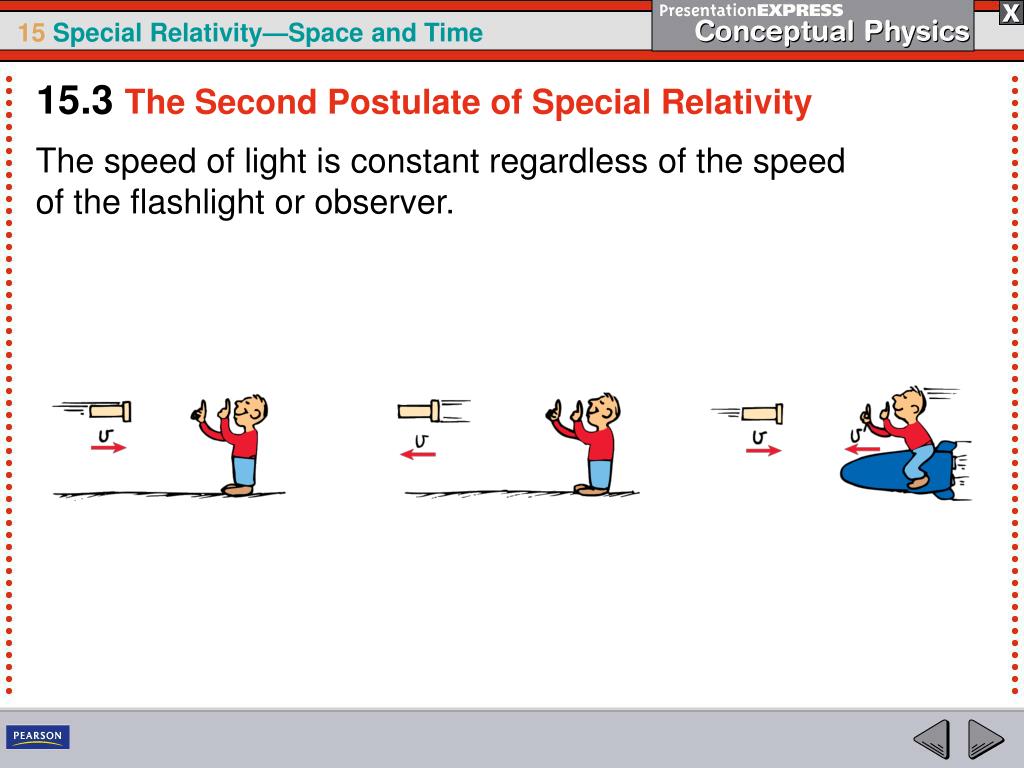
Standard definition of speed of light and metre Web the speed of light is constant in all frames. Web according to the theory of relativity, the speed of light is constant in all reference frames, which means that no matter how fast an observer is moving, they will always measure the same speed of light.
The Formula For Adding Velocities Is V1 + V2 1 + V1V2 C2.
It comes to be 3×10^(8) m/s both the times. O will be our own reference point. The question about why it is 299792458 m/s is answered here:
Plugging C In For V1 Yields C For Any V2.
3×10^(8) m/s is an approximate velocity of light in vacuum. After one second, it has moved, its x coordinate is three times 10 to the 8th meters. Its significance is far broader than its role in describing a property of electromagnetic waves.


No comments:
Post a Comment